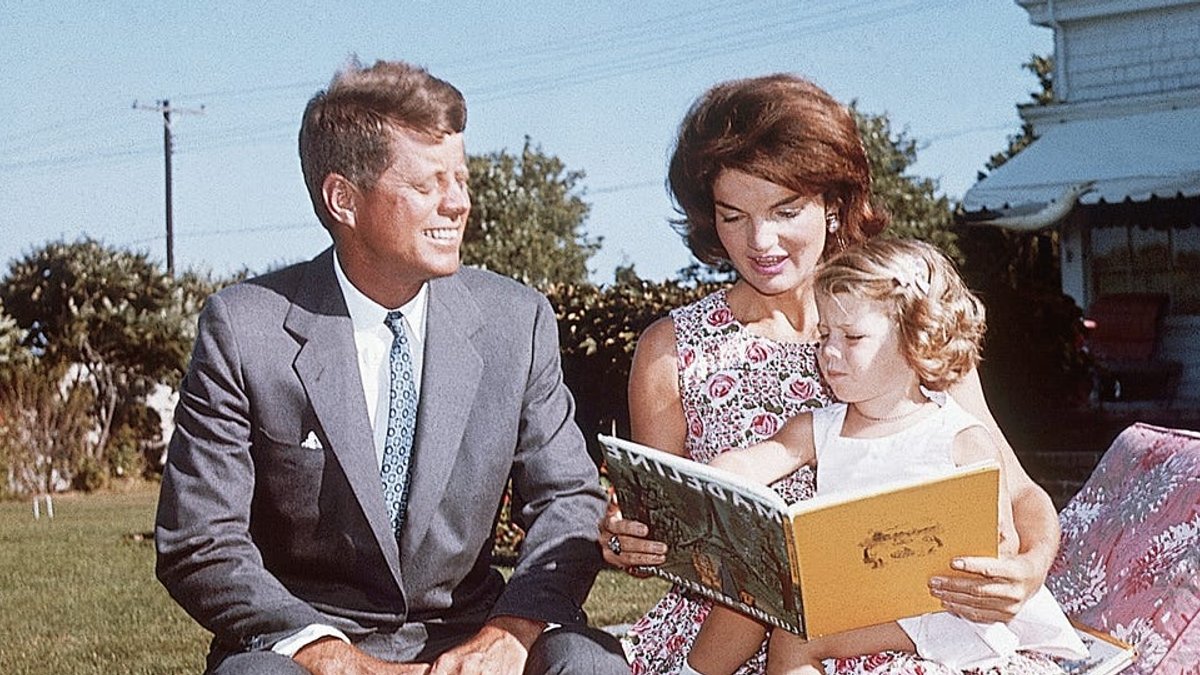
Jacqueline Kennedy Onassis left a mark on American style that went beyond her clothing. She put the same care into the interiors of her homes, from the White House and the Kennedy compound in Hyannis Port to her Fifth Avenue apartment and the houses she shared with Aristotle Onassis in Greece. Newly surfaced, never-before-published letters exchanged between Kennedy and textile designers D.D. and Leslie Tillett show just how deeply she was involved in those spaces.
While Kennedy worked with celebrated decorators such as Sister Parish, Stéphane Boudin, and Albert Hadley, the Tilletts became her go-to collaborators. Their fabrics appeared over and over again in her rooms. The letters, now made public, offer a rare look at the creative partnership behind some of Kennedy’s most memorable interiors.
Related: The 20 Yard Dumpster: Overview, Cost And More
By the time Kennedy moved into the White House in 1961, the Tilletts were already established in American decorating. Their company, Tillett Textiles, founded in the 1940s, built a reputation on hand-screened fabrics and a custom approach. Their clients included decorators like Sister Parish and Albert Hadley, as well as socialite Bunny Mellon. It was through Parish and her work on the White House renovation that the Tilletts connected with Kennedy.
According to Seth Tillett, the couple’s youngest son, Kennedy was far from a passive client. Ideas often started when Parish looked through the Tilletts’ swatches and samples, sometimes with Kennedy or Hadley present. Once a motif was picked, Parish and Tillett would work it out together — adjusting color, scale, and composition. Kennedy stayed involved throughout, reviewing samples in her rooms and voicing her opinion along the way. Seth Tillett described the process as having “much back and forth,” shaped by Kennedy’s eye and also by input from others around her, including her sister Lee Radziwill, who “had very strong opinions,” he said.
One of the best-known results of that collaboration was the daisy motif used in the 1961 renovation of Kennedy’s White House bedroom. It appeared on the curtains and an upholstered headboard. Now called “Jackie’s Daisy,” the pattern brought together Kennedy’s interest in historic preservation, Parish’s American country sensibility, and the Tilletts’ adaptability. It remains one of the textiles most closely tied to both the Kennedy White House and the Tillett legacy.
Related: 5 Issues To Do Earlier than Starting Your Remodeling Project
The relationship did not stay in Washington.
At the Kennedy family compound in Hyannis Port, she used Tillett fabrics again — including the studio’s Chrysanthemum patterns. Kennedy also wore clothing made from those same fabrics, pulling the patterns from her homes into her wardrobe. Years later, during her marriage to Aristotle Onassis, she wrote from Greece about using a striped fabric from the Tilletts in the couple’s home. In one letter, she sketched the dimensions of the banquettes she hoped to cover in what she called the “Joseph’s Coat of Many Colors” stripe.
In 1986, the Tilletts got involved in Caroline Kennedy’s wedding, designing custom tablecloths for the celebration. Afterward, Kennedy wrote to D.D. Tillett to thank her. “No one could possibly have created anything more perfect,” she wrote. “And, it all made Caroline so happy.” In a later note, she mentioned that the tablecloths had been stored alongside her daughter’s wedding dress.
The letters show a relationship that went far beyond fabrics. Over decades, Kennedy and the Tilletts became fixtures in each other’s lives, sharing family news and creative ambitions. In one note, she wrote simply, “I hope to see you also — and that all we will all have is good news for each other. Thank you with all my heart.”




Leave a Reply